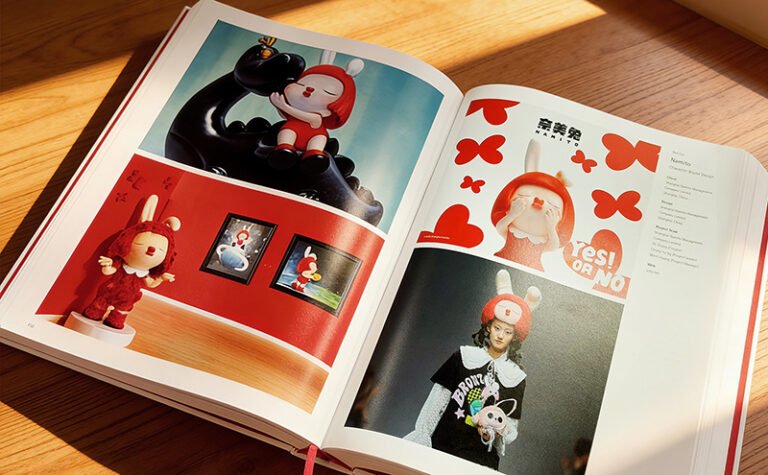
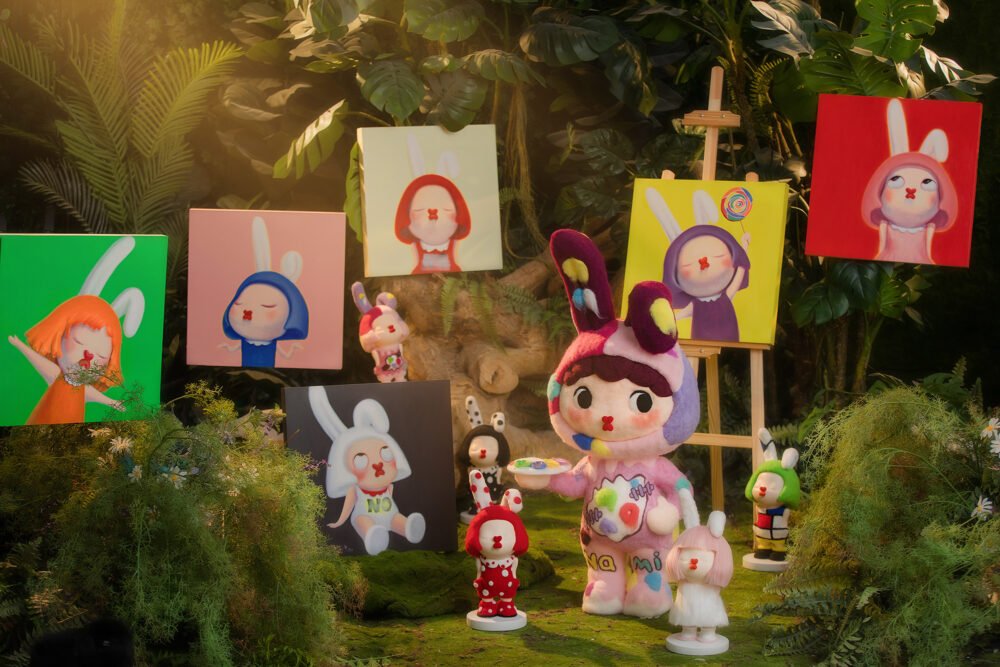
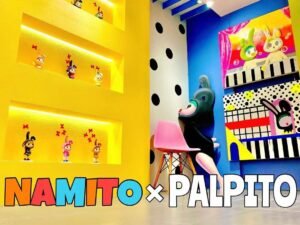
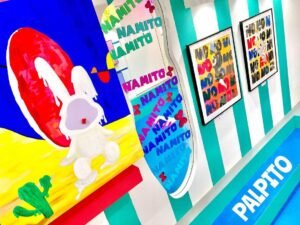
From March 3 to April 20, the PALPITO Gallery in Ginza, Tokyo, presents the “Namito, He” exhibition, the first solo exhibition in Japan by French-Chinese contemporary artist Lune Zhang. The exhibition features 31 works, including some recent creations being shown to the public for the first time.
In recent years, the rise of pop art has infused contemporary culture and art with unparalleled vitality, bringing it into the public eye. This art form, encompassing various categories such as contemporary art, pop art, street art, and urban art, has gradually evolved from a niche interest into a global art trend, demonstrating the contemporary relevance of artists’ subject matter. Artists have keenly focused on the future and technology, trends and fashion, and even the reinterpretation of traditional art in a contemporary context, thus giving pop art greater inclusivity and openness.
Zhang Ge (Lune)’s work explores and particularly embodies the unique inclusiveness and creative tension of trendy art. She created the original Namito art IP character and engages in multi-media and multi-dimensional artistic creation around Nami Rabbit. In her creative process, she adheres to the concept of subtracting from her own inner self, creating a pure “Namito metaverse.” At the same time, with her highly personal artistic language, she integrates her understanding of Western art gained over a decade in Europe with Chinese culture and trendy cultural symbols, showcasing the unique charm of artistic creation imbued with both Eastern and Western cultural backgrounds. This characteristic also coalesces into her powerful creative energy.
In terms of creative philosophy, Zhang Ge’s inspiration comes from Nietzsche’s “Three Metamorphosises.” The first stage of spiritual transformation is the camel stage. He carries a heavy burden, works tirelessly, and survives under the influence of societal values, lacking his own independent judgment. The second stage is the lion stage. The transformation from camel to lion is both a challenge to traditional values and spirit, and a challenge to himself. The behavior at this stage is a rebellion against societal values, full of destructive power but lacking creative ability. Finally, there is the third stage of spiritual transformation—the child stage. The “child” is above the “camel” and “lion” stages; its state is the most free and authentic, containing limitless possibilities. Its decisions follow its own will, and its standards for things come from itself, not from societal values; it is an independent self. Zhang Ge’s “Namito” series represents this third stage of “childhood.”